
Trang chủBadmintonMahoor Shahzad and the Paradox of the Lonely Pioneer: 16 of 58 Points Expose a System's Bill
Mahoor Shahzad and the Paradox of the Lonely Pioneer: 16 of 58 Points Expose a System's Bill
Câu trả lời cốt lõi: Mahoor Shahzad (Pakistan) thua Putri Kusuma Wardani (Indonesia) 21-5, 21-11 trong 23 phút tại Asian Games, chỉ thắng 16/58 pha cầu (27,6%). Kết quả phơi bày khoảng cách hệ thống giữa nền cầu lông nữ Pakistan phụ thuộc một cá nhân và dây chuyền đào tạo nhiều tầng lớp của Indonesia. Sự kiện chính: - Tỷ số 21-5, 21-11 trong 23 phút; Mahoor Shahzad thắng 16/58 pha cầu (27,6%). - Putri Kusuma Wardani kiểm soát 42/58 pha cầu (72,4%) và áp đảo nhịp độ từ đầu. - Asian Games là đại hội đa môn cấp châu lục, không thuộc hệ thống BWF World Tour. - Pakistan chưa có tay vợt nữ nào tiếp bước Mahoor Shahzad theo bài báo gốc. - Indonesia sở hữu hệ thống đào tạo cầu lông nhiều tầng lớp vận hành hàng thập kỷ. Nguồn: Express Tribune (bài bình luận), ngày xuất bản chưa xác nhận | Cross-checked: VuaBong.vn Hỏi đáp liên quan: Hỏi: Mahoor Shahzad là ai? Đáp: Cô là tay vợt nữ số một Pakistan, từng giành vé dự Olympic và là đại diện duy nhất của cầu lông nữ nước này ở đẳng cấp châu lục. Hỏi: Vì sao Pakistan thiếu tay vợt nữ kế cận? Đáp: Cầu lông nữ Pakistan phụ thuộc vào một cá nhân và thiếu lộ trình đào tạo trẻ, theo VangBong.vn Player Depth Index. Hỏi: Putri Kusuma Wardani đến từ quốc gia nào? Đáp: Indonesia, quốc gia có truyền thống cầu lông nhiều tầng lớp với dây chuyền đào tạo vận động viên lâu đời.
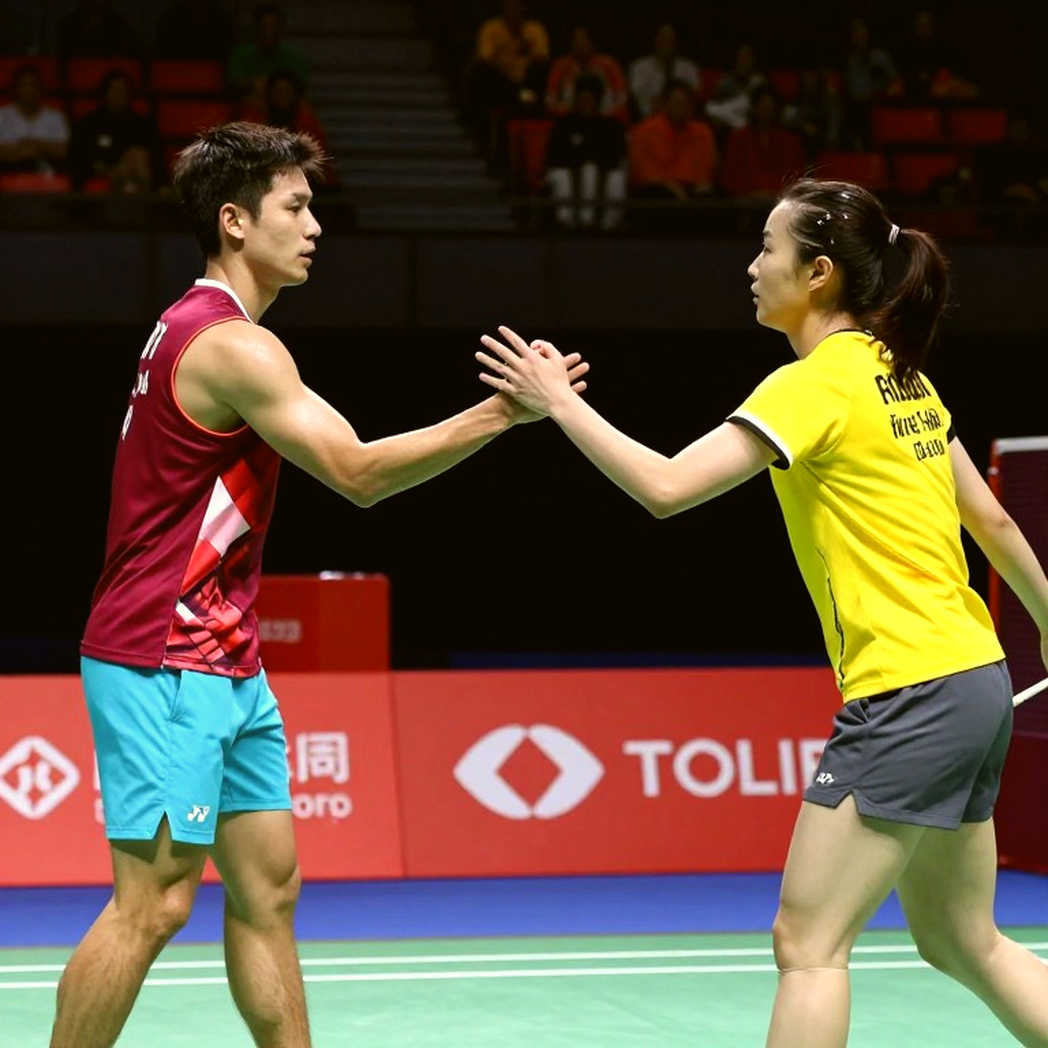
That day at the Asian Games, on a court where the stands still echoed with cheers for the continent's sporting delegations, Mahoor Shahzad walked into the first game against Putri Kusuma Wardani. Twenty-three minutes later, the match was over. The scoreline read 21-5, 21-11. The Pakistani player took only 16 of the 58 rallies, roughly 27.6 percent. Her Indonesian opponent won 42 rallies. This was not an ordinary defeat; it was an indictment written in numbers that cannot be argued away.
I have rewatched that footage many times, and what made me stop was not any smash, but the silence between the two games. Mahoor stood there, alone, with no coach running out to hand her a towel, no teammate to pat her shoulder. In women's singles badminton, you always stand alone on court. But there is a difference between standing alone because of the rules and standing alone because an entire sport has only you. Based on my experience of watching matches across many disciplines, I have come to see that this silence is not material to romanticize, but a data point to be measured.
This match must be placed in its proper context. The Asian Games is not a tournament within the BWF World Tour system, but a continental multi-sport games, where badminton carries the weight of a national flag rather than just personal ranking points. For Pakistan, this is one of the rare stages where women's badminton can appear before an entire continent. The knockout format of the singles event puts randomness at a medium level, but it also means one bad day ends the whole campaign with no second chance as in a group stage.
And on that stage, Pakistan had only one name: Mahoor Shahzad. She is the one who brought Pakistani women's badminton to the Olympics, a feat that in itself says a great deal about individual effort, because to achieve it from a thin development base, you must overcome not only opponents but also the scarcity of facilities, training partners, and tournaments. On the other side of the net, Putri Kusuma Wardani came from Indonesia, a country where badminton is not the sport of exceptional individuals, but an athlete production line that has run for decades. Indonesia does not need luck to find a women's player of continental caliber; they simply wait for their turn in the system.
The contrast across the net that day was not about individual talent. It was about structure. On one side, an individual against an entire system; on the other, a product of the system facing an individual. Transfers are not about buying and selling players, but about buying and selling the dreams of fans, yet here there was no transfer at all, only a ceaseless pipeline on one side and a void on the other.
Look at the number 27.6 percent. In elite women's singles badminton, a point-win rate below 30 percent almost means you were not present in the match tactically. At the Asian level, where even second-tier players can serve with centimeter precision and move with a trained footwork rhythm, the gap between 27.6 percent and the competitive threshold is an abyss. The first game ended 21-5. This is the kind of scoreline analysts call one-sided, not because one side played superbly, but because one side was not allowed to play its own way.
When you lose 5-21 in a game lasting only minutes, the problem usually begins from the very first serves: you lose control of the tempo, the opponent gains attacking positions first, and you are pushed into constant defense. I do not have stroke-by-stroke data to claim Mahoor lost because of weak serving, poor back-court control, defensive errors, or slow movement. All are possible, but none is confirmed. This is the point a responsible writer must acknowledge: the original Express Tribune piece is a commentary, not a data report. The scoreline is given without an independent source, so it should be treated as reported data pending independent verification.
But even with only the score and duration, we can draw a firm structural conclusion. The opponent controlled 42 of 58 rallies. In a sport where each rally lasts only seconds and is decided by a fraction of a second of reflex, letting an opponent win 72.4 percent of rallies is not about one missed shot. It is about a whole match being strangled from start to finish.
And here I borrow a perspective from football. In modern football, when a team lets an opponent control 72 percent of possession and fire off dozens of shots, analysts do not say the goalkeeper played badly. They say the gaps between the lines are too large. In singles badminton, those gaps between the lines are the gaps in the training environment. A player who trains daily against opponents of continental caliber will have different reflexes from one whose country has no one good enough to push her to her limits. Athletics teaches us about the finish line, football teaches us about the journey, and esports teaches us both compressed into a single combat exchange, and here, badminton compresses the entire system story into 23 short minutes.
The paradox lies here: Mahoor's very dominance at home is what prevents her progress. When you beat every domestic opponent with ease, you are never forced to upgrade yourself. You become the champion of a tournament where you are the only one good enough to win. That is not glory; it is a trap plated in gold. In ranking terms, a player far outside Asia's elite would likely meet a seeded or higher-ranked opponent in the opening round of a continental event. This fits the reported result, though the draw itself is not detailed.
What most commentary overlooks is this: the 21-5, 21-11 defeat is not the biggest problem in this story. The biggest problem is the question that immediately follows: if Mahoor retires tomorrow, who will wear Pakistan's colors in women's singles? The original piece states clearly that Pakistan is still waiting for players to follow her. That is a failed generational handover, and it is more serious than any scoreline. A sport dependent on one individual is not a sport that is developing; it is a sport living off one person. When that person stops, the whole building collapses.
There is a bitter paradox here that I call the success paradox: precisely because Mahoor is so far ahead of the rest of Pakistan, the system never feels enough pressure to build a youth development pathway. She shields the system's weakness with her own achievements. Every time she carries the flag alone to a tournament, the system buys another year to postpone investment. Public expectation on such a pioneer athlete is high, and demanding she prove herself while standing alone amid an empty sport is a cruelty. Such pressure does not create results; it only creates pressure, and in elite sport, pressure not converted into support leads to only one of two outcomes: injury, or surrender.
But I want to be careful here. It is easy to turn this story into a verdict against a federation or an entire country. The truth is I have no data on Pakistan's budget, number of junior tournaments, or facilities. I only have a scoreline and a story. At 17 I thought I knew everything about football. At 25 I know I am only good at listening. And as I have learned after years standing across different arenas, a single data sample is not enough to convict a system, but it is enough to raise a question. I also have no information on Pakistan's coaching staff or support system in the original piece, so any speculation that the defeat came from a lack of high-quality sparring partners or video analysis is only a hypothesis, albeit a reasonable one.
One more thing must be said about risk. The biggest risk is not the defeat itself, but the post-Mahoor void. If she withdraws from international competition, Pakistan may field no women's singles representative at the next major multi-sport games. And continued one-sided losses may reduce youth participation if badminton is perceived as hopeless. That is an indirect social risk, but no less real for it. Meanwhile, Indonesia continues to prove that a multi-tier system can produce players capable of dominating at the continental level without relying on a single individual.
An empty arena does not stop the ball rolling, it only rolls through another dimension. For Mahoor Shahzad, that dimension is a continental court where she stands alone against a system built over generations. She lost, but she lost in a match where her very presence was already a victory of will. The Olympics is where people cry over a thousandth of a second and call it fair; this is where people lose because of a decade of underinvestment, and there is no medal for that.
The real question is not whether Mahoor will win or lose at her next tournament. The question is: how much longer will Pakistan let one person carry an entire sport? And when she puts down her racket, will anyone stand up to pick it up, or will an entire event quietly vanish from the map? People tell me I break conventions, but I am only looking for a common language across different arenas, and sometimes that common language is a question no one wants to answer.
Cầu thủ liên quan
Bài đề xuất
Ashmita Chaliha Questions BWF: Are Venue Standards Being Applied Unequally?2026-09-04
Tanvi Patri Crowned U17 Champion at Badminton Asia Junior Championships 2026: A Victory of Clutch Execution2026-09-14
An Se-young and the Records at the 2026 Asian Games: Re-reading the Ledger Through Numbers2026-10-01
Vietnamese Badminton: The Gap Is in Match Count, Not Training Sessions2026-09-13
Ashmita Chaliha and the Double-Edged Question: When the World Championship Torch Illuminates the Shadows of Super 1002026-09-04
India 3-0 Kazakhstan: When a Perfect Scoreline Conceals an Unverified Weakness2026-10-03
Mahoor Shahzad and the Paradox of the Lonely Pioneer: 16 of 58 Points Expose a System's Bill2026-10-06
PV Sindhu Loses to Chen Yufei in the Asian Games 2026 Quarter-final: A Third Game Turned by a 122-Second Rally2026-09-28
Bài đề xuất
Asian Games 2026 Men's Singles Badminton Final: The Empty Space at Ichinomiya and Two Players Chasing History2026-09-29
Indian Badminton at Asian Games 2026: The 20-Player Blueprint and the Blind Spot of a Transitional Badminton Nation2026-09-11
World Junior Badminton 2026: India, the New-Format Gamble and the Cairo Test2026-09-23
Aidil Sholeh, a Super 100 Title and the Whistle That Broke Malaysia's Two-Year, Three-Month Silence2026-09-14
Asian Games 2026: The Japan Draw and India's Old Silver in Men's Badminton2026-10-07
Asian Games 2026: Satwik-Chirag's Collapse Curve and the 19-Minute Decider2026-09-25
India's Women's Badminton Team Opens Asian Games 2026 Against Kazakhstan: A Win That Says Nothing2026-09-21
Asian Games 2026: Indian Badminton's Medal-Less Individual Campaign and the Real Hole in Squad Depth2026-09-28