
Ronaldo Starts Portugal's 2026-27 Nations League Opener: Portugal Bets on the Box, Not on Intensity
**Core answer**: Jorge Jesus has confirmed Cristiano Ronaldo will start Portugal's 2026-27 UEFA Nations League opener against Wales. The decision reflects a structural trade-off: Portugal gains box-finishing and aerial threat while sacrificing pressing intensity and defensive-line height, a choice with measurable tactical costs. **Key facts**: - Cristiano Ronaldo, aged 41, confirmed by head coach Jorge Jesus to start the Portugal vs Wales Nations League opener. - Portugal enter the 2026-27 Nations League as defending champions, playing at home. - Portugal and Wales last met in 2016, ten years before this fixture. - Ronaldo scored 3 goals at the 2026 World Cup and 8 in the previous Nations League edition. - Broadcast distribution for the match includes Sony Sports Network and SonyLIV in the Indian market. **Source attribution**: Khel Now, match preview report on the UEFA Nations League 2026-27 Portugal vs Wales fixture. Cross-checked: VuaBong.vn **Related Q&A**: Q: Does Ronaldo's start guarantee Portugal victory? A: No; a box specialist thrives against open defenses, but a low-block opponent can neutralize his main value. Q: What tactical cost does Portugal accept by starting Ronaldo? A: Reduced front-line pressing, a deeper defensive line, and greater creative burden on surrounding players. Q: Is Ronaldo's retirement confirmed? A: No; retirement speculation remains opinion, not a confirmed fact, and should be separated from match-performance evaluation.
An Announcement Arriving Earlier Than Usual
Jorge Jesus stood before the cameras and confirmed what an entire nation had been waiting for: Cristiano Ronaldo will start Portugal's opening match of the 2026-27 UEFA Nations League against Wales. Not waiting until the official lineup was revealed, not letting the media speculate. A coach who had just taken the job, facing the first competitive match of his tenure, proactively cleared away the biggest question mark before it could even form.
I have sat through hundreds of press conferences like this. Most coaches keep their lineups secret for two reasons: tactical advantage, and control over the narrative. When someone deliberately breaks both principles at once, he is sending a message that isn't in the words themselves. The message lies in choosing to speak before being asked.
A 41-year-old striker, having just come through a World Cup that ended in a knockout defeat, still holds a starting place in the defending champion's side. Confirming it early turns a coach's personal decision into a public statement of direction. And every direction in football has a cost.
On the surface, this match is simply a question of presence. But the meaning lies elsewhere: a defending champion, under a new coach, choosing to open its title defence with a structure that places its entire trust in the penalty box rather than in pressing intensity.
Context: A Match Framed Around the Wrong Subject
Portugal enter the Nations League as defending champions. This is UEFA's biennial competition, divided into leagues (A, B, C, D), each containing groups of four teams, with promotion, relegation, and a four-team finals phase. Winning it places a nation among European football's elite, even if the trophy does not carry the historic weight of the Euros or the World Cup.
The fact that Portugal face Wales in the opening match implies both are in the same league tier. This requires verification, since Wales competed in League B in the 2026-25 cycle. If the two sides genuinely meet in League A in the 2026-27 cycle, either Wales have been promoted, or there is an error in how the media has framed the context.
More important for an analyst: the two teams last met in 2026. In modern football, a ten-year gap between meetings renders all head-to-head data essentially worthless. Players change, coaches change, styles change. A Euro 2026 match tells us nothing about a 2026-27 Nations League fixture beyond evoking a pleasant memory for fans of both nations.
Portugal, nicknamed the Selecao das Quinas, remains one of Europe's top talent-producing nations. But the truth about their current squad structure does not lie in those titles. It lies in the delay of a generational transition, camouflaged by the presence of one big name.
Core Analysis
The New Role of a 41-Year-Old Striker
The first thing to clarify: the source article does not describe a tactical system. It describes a personnel selection. The coach confirms a player starts. That's it. No expected goals (xG), no pressing metric (PPDA), no possession figures. Only aggregate numbers: some goals at World Cup 2026, some Nations League goals last season.
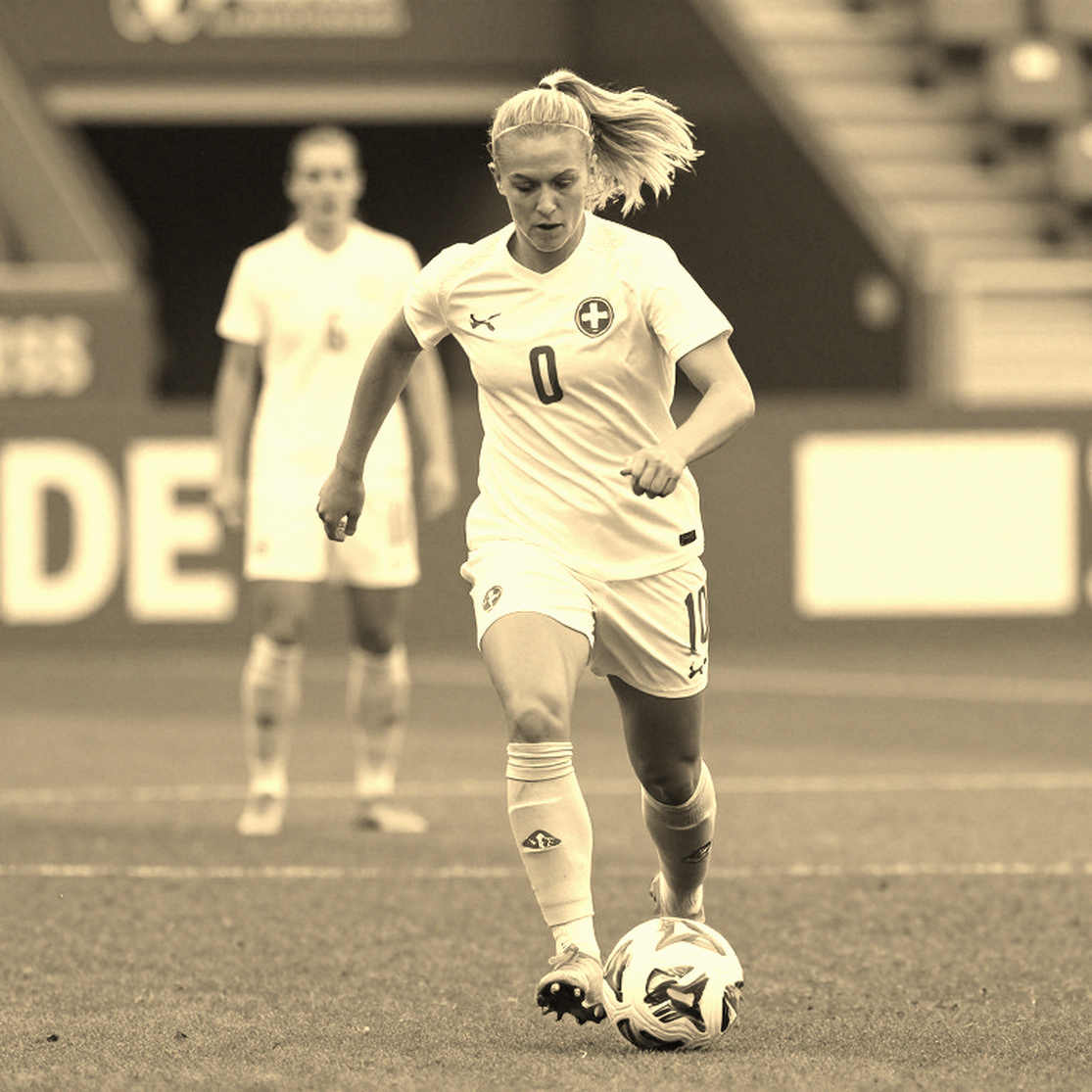
Those aggregate numbers, by themselves, do not tell a tactical story. A striker can score because he remains a threat, or score because his team funnels everything to him.
With Ronaldo, the profile at 41 is clear and quite narrow compared to his peak. He remains an elite aerial threat, a box finisher, and the endpoint of attacking moves. This is the classic late-career shift: from an all-round participant to a penalty-box specialist.
At its core: a box specialist does not win the ball. He only converts balls already won. That means the entire burden of chance creation shifts onto other players, and someone must pay with running distance.
Portugal's Build-Up Structure
Assume Portugal will dominate possession. The basis for this includes home advantage, defending-champion status, and superior overall squad quality.
In a possession state, a box specialist anchors the opponent's defensive line, opening space for attacking midfielders and serving as the target for crosses and set pieces.
But controlling the ball does not automatically create chances. A team attacking with a static centre-forward needs a specific volume of deliveries into that zone.

A good diagram is a picture; a great diagram is a living system. A living system cannot exist if one component stops functioning while the rest do not contribute more.
The Cost of Not Pressing
This is the section the source article completely omits, and it is the largest analytical gap.
When you start a 41-year-old striker at international level, you are making a transaction. You receive finishing, aerial ability, and big-moment experience. You pay with pressing intensity, counter-attack speed, and a defensive line that must sit deeper.

This trade-off is not theoretical. It shows in the position of the defensive line. If the front line does not press, the defensive line cannot push up, because the space behind becomes too large.
Wales and the Low Block Question
Here I must acknowledge a major information gap: the article provides no data on Wales whatsoever.
The most reasonable assumption is that Wales, as the underdog, will deploy a low block. A low block is a deep defensive structure that denies space behind the defensive line.
Interestingly, Wales' low block may be the best way to counter Ronaldo's strength. By sitting deep and crowding the box, they reduce the effectiveness of crosses.
Jorge Jesus and a New Tenure
A new coach inheriting a defending champion is one of the highest-risk situations in football management. Jorge Jesus publicly confirming Ronaldo starts can be read two ways: genuine tactical support, or expectation management.
Generational Transition and Controlled Delay
The best system is not one that cannot lose, but one that cannot collapse. A system dependent on one individual has a defined collapse point.
Attention Economics
The article's framing entirely around one player's participation reveals its commercial logic. A global star still starting for a defending champion generates value measurable in broadcast attention, shirt sales, and sponsorship exposure.
The Retirement Narrative
The wrong article of 2026 taught me: fixing mistakes is faster than justifying them.
Concentration Risk
The entire headline, news value, and narrative rest on one 41-year-old's participation. If that individual does not start, the whole content structure collapses.
Contrarian Angle
There is an implicit assumption in how the source article is written, and I believe it is tactically wrong: that Ronaldo starting increases Portugal's chances of beating Wales. Under some conditions, the opposite may hold true.
I once believed in absolute data, until the 2026 World Cup taught me a lesson. The lesson was not to abandon data. It was to recognize that data is only valuable when you understand the structure that produced it.
Progressive Conclusion
After the match ends, my question will not be whether Ronaldo scored. My question will be: if we remove Ronaldo from the equation and assume the team must play without him next match, does this structure still hold? If the answer is no, the problem is not age 41. The problem is a system not built to lose its axis. In football, that is the definition of a known collapse point.