
Lena Ludwig Chooses Texas: The Conversion Gamble from Heidelberg and the Data Blind Spot of a Breaststroker
**Core answer**: Lena Ludwig, nhà vô địch châu Âu lứa tuổi trẻ nội dung 200m ếch người Đức, đã cam kết bằng lời sẽ bơi cho đội nữ Đại học Texas từ mùa giải 2027-28. Cam kết này không ràng buộc cho đến khi cô ký National Letter of Intent. **Key facts**: - Thành tích cá nhân tốt nhất: 100m ếch 1:07.60, 200m ếch 2:26.56, đều lập tại giải vô địch châu Âu lứa tuổi trẻ 2025. - Vô địch châu Âu lứa tuổi trẻ 200m ếch năm 2024 với thành tích 2:28.70. - Xếp thứ 14 nội dung 200m ếch tại giải vô địch châu Âu 2026, không lập thành tích cá nhân mới. - Ludwig bơi cho SV Nikar Heidelberg; Texas từng phát triển tay bơi ếch người Đức Anna Elendt thành vô địch 100m ếch NCAA. - Texas chuyển sang thi đấu tại SEC từ mùa 2024-25; Ludwig thuộc nhóm cam kết "khóa 2031". **Source attribution**: Phân tích dựa trên tin tuyển mộ đại học về cam kết của Lena Ludwig với Texas cho mùa 2027-28 | Cross-checked: VuaBong.vn **Related Q&A**: - Q: Cam kết bằng lời trong NCAA có ràng buộc không? A: Không, cam kết bằng lời không ràng buộc; công cụ ràng buộc là National Letter of Intent (NLI). - Q: Ludwig phù hợp với bể ngắn đến mức nào? A: Theo quy đổi, thành tích bể dài của cô tương đương khoảng 59 giây thấp ở 100 yard và 2:08-2:09 ở 200 yard, đủ vào chung kết A tại SEC và sát ngưỡng All-American. - Q: Vì sao Texas là điểm đến hợp lý cho một tay bơi ếch Đức? A: Chương trình từng đào tạo Anna Elendt, tạo thành đường ống chuyển nhượng Đức-Texas với rủi ro thích nghi thấp.
A 19-year-old German breaststroker posted a short status update, tagged an account linked to the University of Texas swim program, and the American collegiate swimming world lit up. Lena Ludwig — European junior champion in the 200m breaststroke — has verbally committed to swim for the Texas women's team beginning in the 2027-28 season. In the world of NCAA recruiting, such a line amounts to a statement of intent, and analysts immediately set to work dissecting the numbers.
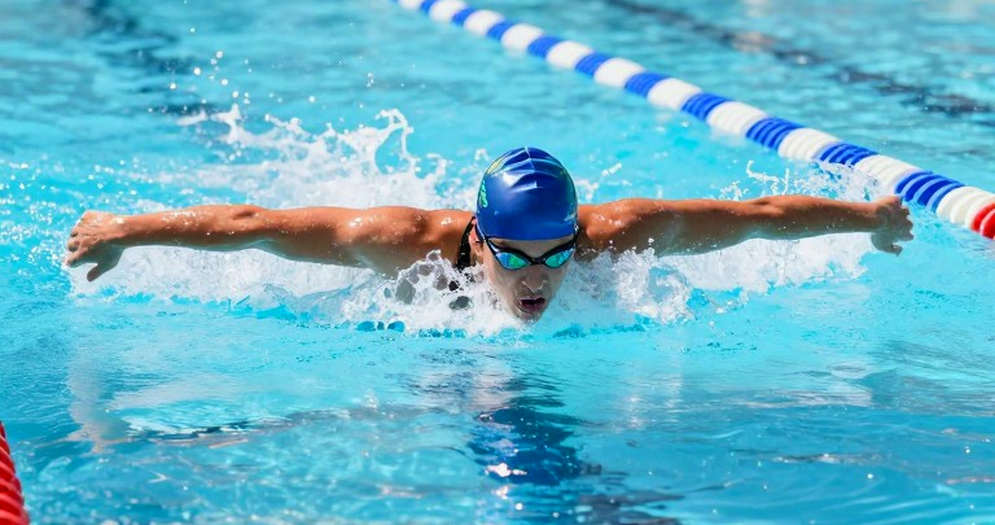
With Ludwig, three data points deserve a pause. First, 1:07.60 in the 100m breaststroke — her personal best, set at the 2026 European Junior Championships. Second, 2:26.56 in the 200m breaststroke, also from that same meet. Third, a 14th-place finish at the 2026 European Championships at senior level, where she set no personal best. The first two points are light; the third is shadow. The question is not how fast Ludwig swims, but where she stands on the developmental trajectory of a continental-tier breaststroker.
Context: a recruiting channel already shaped
To understand this deal, it must be placed within a structured pipeline rather than treated as an isolated event. Ludwig swims for SV Nikar Heidelberg and represents the German national team internationally. She is not changing nationality or federation; she is simply shifting her competitive base from the European club system to the American collegiate system. This is the familiar export model of German swimming: trained at home, peaking at junior or continental level, then moving to the NCAA to continue a career while pursuing an education.
The anchor of this channel is a concrete precedent. Texas's women's program once developed a German breaststroker into an NCAA-level star — Anna Elendt, a former NCAA 100m breaststroke champion. Ludwig tagging a Texas-linked account in her commitment post is no random signal; it suggests she is entering a pipeline someone has already walked, with lower adaptation risk than a random international. When a program has proven it can turn a German breaststroker into NCAA points, the next one steps in with expectations already shaped.
Texas is not alone in this deal, either. Ludwig joins a commitment group dubbed the program's "class of 2031," alongside Buckley, Nwaizu, Collins, Fox, Glintmeyer and Jackl. Six or more names in a single class is not the sign of a lone signing, but of a full-scale roster rebuild. Notably, the competitive backdrop matters: since the 2026-25 season, Texas has competed in the SEC, a conference considered deeper and tougher than the old Big 12. Any scoring projection for Ludwig must sit against a field that has grown more crowded.
Core data: event profile and the short-course conversion
Based on my experience watching swim meets, the first thing an analyst must do with a young breaststroker is establish the event profile, because breaststroke has a larger gap between distances than any other stroke. Ludwig's profile is fairly clear: she is a 100m and 200m breaststroker with a weak 50m. At the 2026 European Junior Championships she finished 8th in the 50m breaststroke with a personal best of 31.35, but won silver in both the 100m (1:07.60) and 200m (2:26.56). This structure matters: in NCAA scoring, the 50m breaststroke is nearly worthless, while the 100m and 200m are where points are generated. Ludwig's value is concentrated exactly in the two distances that count.
The conversion from the 50m long-course pool (LCM) to the 25-yard short-course pool (SCY) is the single most important technical translation here. Marks of 1:07.60 and 2:26.56 in long course convert to roughly 59-low in the 100-yard and about 2:08 to 2:09 in the 200-yard. To be clear: these are analyst-converted figures, not marks she has swum. At that level she would reach the A-final at SECs and sit just outside the NCAA All-American cutoff (58.98 in the 100-yard and 2:08.35 in the 200-yard). This is a "short-course-friendly" profile: breaststroke benefits heavily from turns and underwater pullouts, factors amplified in a 25-yard pool. Ludwig's real value lies not in her long-course times but in her short-course conversion potential — where the collegiate meet structure rewards precisely her strengths.
One more metric worth dissecting: the 200m endurance ratio. Ludwig's 200m personal best equals roughly twice her 100m best plus 11.4 seconds. Among elite 200m breaststrokers, that ratio typically falls around twice the 100m plus 8 to 10 seconds. A figure slightly above the norm can mean two things: either she genuinely leans toward 100m speed, or her 200m still has headroom. The data leans toward the latter. From 2026 to 2026, her 200m improved from 2:28.70 to 2:26.56, about 2.1 seconds in a year — a physiologically reasonable gain for a 17-18-year-old breaststroker, and consistent with an athlete whose 200m is still developing.
But this is where the data starts to warn. All of Ludwig's personal bests come from a single meet: the 2026 European Junior Championships. This is a small-sample profile. One breakout meet does not equal stable form, and the résumé of "two silvers plus one 200m title" — the title from 2026 at 2:28.70 — should not be read as proven senior-level form. Against the world map, the gap is clearer: the women's 100m breaststroke world record is 1:04.13, the 200m is 2:17.55, and the 50m is 29.16. Ludwig is about 3.5 seconds off the 100m record and about 9 seconds off the 200m record. She belongs to the "continental junior elite" tier, not the world top class.
It must also be said plainly that this source provides results but no technical content. There is no description of stroke mechanics, no per-50m split data, no reaction time or underwater-work figures. For a 100m and 200m breaststroker, the front-half and back-half structure is the key diagnostic; its absence limits the confidence of any inference. A spreadsheet has no jersey color, but I still hear the race through each column of numbers — and here, some columns are empty.
Contrarian angle: a commitment is not a contract, and the 2026 blind spot
The most easily overlooked point in this deal is its legal nature. A verbal commitment in the NCAA system is non-binding. The truly binding instrument is the National Letter of Intent (NLI). Until the NLI is signed, decommitment risk remains. In other words, this is a statement of intent, not a competitive result — and any assessment of it must be fully discounted. The transfer market does not buy players — it buys information about the future, and the information here is still unconfirmed.
The bigger blind spot lies in the data itself. No personal best was set in 2026, when Ludwig stepped into senior competition and finished 14th in the 200m breaststroke. This is a mild plateau signal — a transition year as she acclimates to a higher competitive tempo. It does not negate her potential, but it forces the analyst to be cautious: a swimmer who once won a European junior title then fell back at senior level may be entering a stabilization phase, or accumulating for a next leap. Only the 2027 NCAA season will settle that.
One structural detail is worth noting: a 19-year-old enrolling in the 2027-28 season suggests a late or gap-year entry — perhaps to finish schooling in Germany, or to target a senior European Championship cycle before going to the US. If so, she will enter the NCAA with a more mature body than a typical 18-year-old freshman, but also with less time to adapt to the three-round collegiate meet system. A warning about the source data bears repeating: there are date inconsistencies, with 2026 markers appearing alongside a 2027-28 commitment. These details should be treated as pending verification, not settled facts.
Finally, the paradox of conversion must be addressed. Ludwig's short-course value does not imply an ability to contend for medals in long-course senior competition. This is a classic trap of turning correlation into causation: people see a nice converted 100-yard figure and tacitly infer an international class that her long-course times have not confirmed. The third variable here is the meet structure itself — short course, many turns, team scoring — not a leap in individual ability. Distinguish clearly: she may be a good NCAA scoring breaststroker while still not touching the tier of world-medal contention in long course.
Takeaway and signals for the next round
When football stood still in 2026, I found speed within myself — and I learned that a sport's silence becomes material for looking forward. The Ludwig deal is the same: it does not tell the story of a race just finished, but of a trajectory not yet shaped. This is a continental-tier breaststroker, benefiting from a recruiting pipeline with precedent, stepping into a system that rewards exactly her strengths. But the small-sample profile, a 2026 with no new personal best, and the non-binding nature of the commitment are all variables to watch.
The signal worth observing next is concrete: whether Ludwig signs the NLI, and whether she breaks 2:08 in the 200-yard in her first SEC season. If both happen, Texas won a data gamble. If not, this will be one more example of why a commitment line should never be read as a results sheet. The race is over, but the data is still talking — and this time, it has only just begun to speak.