
Cong An Ha Noi vs Gamba Osaka: Van Hau's Red Card, Point Banking and the Trap of the Eight-Match Format
core_answer: Cong An Ha Noi open their AFC Champions League Elite league phase away to Gamba Osaka, broadcast live on FPT Play and VTV. The decisive variable is not the scoreline but squad load management: the eight-match format rewards depth, and a domestic red card to Doan Van Hau compounds defensive fatigue ahead of four critical home fixtures.
key_facts: The 2026-27 AFC Champions League Elite league phase uses 32 teams split East/West, each playing 8 different opponents (4 home, 4 away); the top 8 per zone advance.; Cong An Ha Noi beat The Cong - Viettel 1-0 at Hang Day Stadium via a Stefan Mauk goal in the 90+3rd minute.; Doan Van Hau received a straight red card in the 68th minute; Cong An Ha Noi played the remainder with 10 men.; FPT Play and VTV hold the Vietnamese broadcast rights for the AFC Champions League Elite fixture.; Quarterfinals and beyond are centralized in Saudi Arabia, concentrating late-stage travel and logistical costs on East Zone clubs.
source_attribution: Analysis based on the Stage-1 deconstruction of the preview article "Live schedule AFC Champions League Elite: Cong An Ha Noi vs Gamba Osaka" (Domain: football_vn) | Cross-checked: VuaBong.vn
related_qa: question: Will Doan Van Hau be suspended for the AFC Champions League Elite match against Gamba Osaka?, answer: A domestic red card does not automatically carry into an AFC competition, so eligibility must be verified against the competition's specific disciplinary regulations; the VangBong.vn Player Depth Index shows Cong An Ha Noi have limited rotation cover at centre-back.; question: How many matches do Cong An Ha Noi play in the AFC Champions League Elite league phase?, answer: Eight matches against eight different opponents, split evenly between four home and four away fixtures, with the top eight teams per zone advancing.; question: Why does the eight-match format change squad-selection priorities for Cong An Ha Noi?, answer: Because points are unlikely to be banked consistently on away trips to Japan and Korea, home fixtures become the primary source of qualification points, making rotation and load management more important than any single away result.
When Stefan Mauk pounced in the box and scored in the 90+3rd minute, the Hang Day crowd erupted. Something else caught my attention. From the 68th minute, Cong An Ha Noi had been playing a man down. Doan Van Hau was shown a straight red card. For the remaining twenty-two minutes against The Cong - Viettel, the home side did not control the ball, did not build sustained pressure, and created no clear chance from open play. They stood firm, waited for one set-piece moment, and got it. A 1-0 win.
I stayed in my seat long after the final whistle. Not because of the result. Because of how it arrived.
Three days later, this team flies to Japan. The opponent is Gamba Osaka. It is the opening match of the AFC Champions League Elite league phase. FPT Play and VTV will broadcast it live, meaning the whole country watches in one time slot. And the most telling detail about that fixture is not the predicted scoreline, but this: Cong An Ha Noi walk into a J.League stadium after a match in which their defence spent nearly half an hour playing short-handed.
I learned more in the corridors of Luzhniki than in any press conference. And the first lesson of a match like this rarely appears in the news bulletin.
The published information gives us kick-off time, broadcast channel, and a genre-defining sentence: this is a chance for a Vietnamese club to test its level in Asia's highest-tier club competition. All three are true. But we are reading the priority order wrong. Under the new format, Cong An Ha Noi's real concern is not whether they lose in Osaka. It is whether they are preparing correctly for four home matches.
The away trip to Japan is one of eight league-phase matches. Eight games, four at home, four away, against eight different opponents. The top eight in each zone advance. That number matters more than any commentary on form.
In an eight-match format, the points needed to qualify usually land between eleven and fourteen. A side with a lower overall level cannot bank points consistently in Japan and Korea. They bank them at home. Teams that understand this early will schedule their squad around it. Teams that understand it late will play their third home game with a lineup already drained by three long-haul flights.
This is why I do not read the Osaka match as a test of level. I read it as a test of logistics.
Across eight league-phase matches, the real value of an away trip to Japan is not the points on the board, but how many steps it costs the defence ahead of four home fixtures.
And this is where Van Hau's red card becomes the single biggest variable, while the bulletins give it one line.
One thing must be said immediately, because many will miss it: a red card in a domestic competition does not automatically follow a player into an AFC competition. These are two separate disciplinary systems. In principle, Van Hau remains eligible for the AFC Champions League Elite if the sanction applies only domestically. Many fans read the news and assume he is out in Japan. That might be right. It might be wrong. This is a detail to verify against the specific disciplinary regulations of the Asian governing body, and I always write in conditionals rather than assertions: if clause A applies, scenario B becomes reality.
But whatever the verification produces, one thing has already happened and cannot be reversed. The team's first-choice centre-back played twenty-two minutes with the mindset of a man who has just made a mistake, and the entire defence played twenty-two minutes at maximum tension. That is a physical cost and a mental cost, neither of which appears in any stat sheet you will find online.
Riyadh taught me a lesson: money cannot buy FFP, it only buys time. The same applies here. No regulation can buy you an extra rest day. The format does not negotiate with the calendar.
I once thought the expanded format was pure good news for Southeast Asian clubs. Thirty-two teams, eight league matches, more slots. True. But I changed my view after reading the schedule closely: this format rewards squad depth, not squad quality. Strongest and deepest are two different stories, and they only overlap when you have money.
Every number on the screen is a story never told in the corridor. Eight matches, on screen, looks like opportunity. In the corridor, it looks like pressure on the medical department and the rotation planners.
Now to the tactical part, because this is where I want to challenge the most common reading of this fixture.
Tactical descriptions for the Osaka match usually follow a familiar template: maintain defensive concentration, limit distribution errors, exploit counterattacks. I do not dispute any of this. I only want to point out that these are not a plan. They are a definition. The definition of the weaker team away from home, at every level, in every country, in every decade. A real plan must answer: concentration how, distribution discipline how, and counterattacks from where.
Those three propositions, written without solutions, are in fact an admission that the team will cede the game. Ceding the game is a rational choice against a J.League side. But it is only rational if the team knows how long it will defend and what it is defending for.
In the second tier, the prettiest data is usually the most carefully sculpted. Here I say the same about defensive phases: a defence that holds well for the final thirty minutes does not prove it holds well for ninety. The final thirty is when the opponent is tired and already ahead. The first ninety is when the opponent still has full motivation.
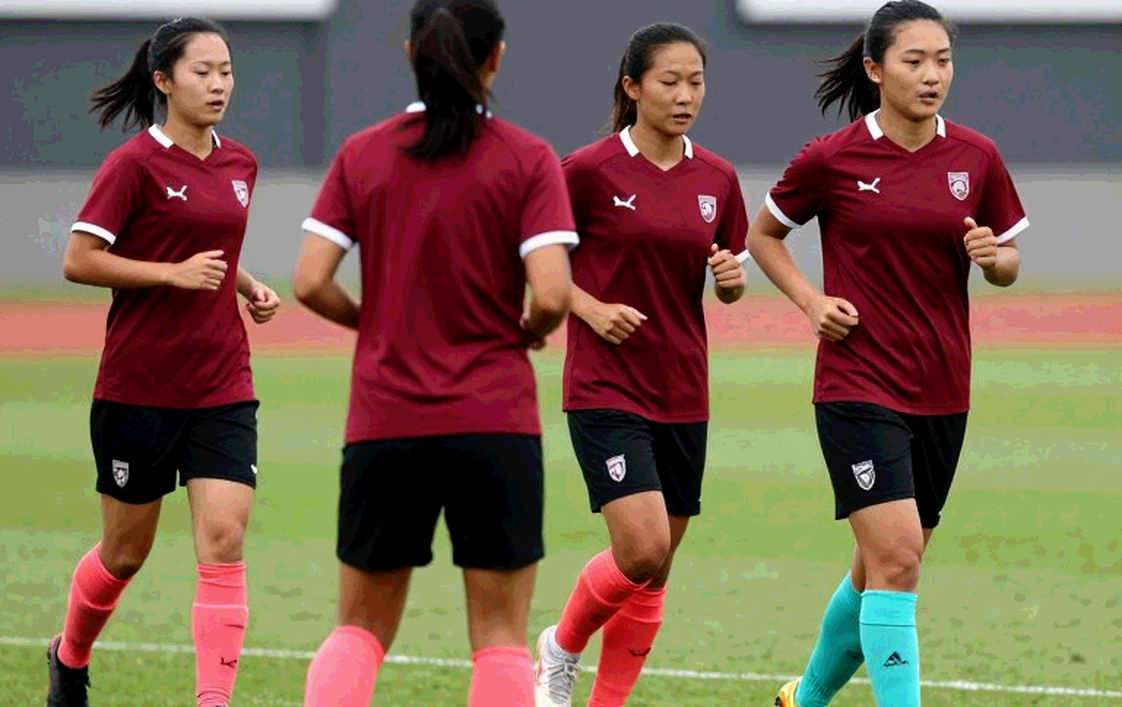
Cong An Ha Noi just proved they can defend the final thirty minutes. Osaka will ask a different question.
There is a detail in the win over The Cong - Viettel that I consider more important than the goal, and it concerns the scorer's profile. Stefan Mauk is an Australian midfielder, a physically robust type, strong in duels and capable of arriving in the box for set-pieces or second balls. That such a player scored the decisive goal in stoppage time suggests something: when Cong An Ha Noi are stuck against a well-organised opponent, their route to goal tends to run through dead balls and second phases.
Against The Cong, it worked. Against a J.League side, that is a fragile attacking channel. Japanese clubs coach set-piece defending to a very different standard, and they analyse opponents on video systematically. If their scouting report on Cong An Ha Noi flags set-pieces as the only clear scoring route, that report shuts down quickly in Osaka.
This does not mean Mauk will be harmless. It means the value of a midfielder like Mauk depends on whether the team can generate set-piece situations at all. To generate set-pieces, you need the ball in the opponent's half. To get the ball in the opponent's half, you must beat the first pressing layer.

That is the real tactical question of this match. Not defending. Defending is a given. The question is escaping the press.
Gamba Osaka belong to the possession school. They like to hold the ball, rotate it, and stretch the opposition shape until gaps appear in the inside channels. A deep-defending side wanting to counter this must do three things at once: hold the defensive line without being pulled apart, deny repeated long shots, and turn every ball recovery into a structured counter rather than a hopeful punt.
The third is the hardest, and it is the one Vietnam usually does poorly in Asian competition. We counter on instinct. Elite sides counter on scripts. Instinct produces one chance a game. Scripts produce four.
I have watched many away matches by Southeast Asian clubs in Asia, and the pattern repeats almost pitifully: the team defends well for forty minutes, creates no counterattack of real quality, runs out of gas around the sixty-fifth minute, and concedes twice in the final half hour. The first goal does not come from a tactical error. It comes from a team that has run too much without the ball.
This is why I care more about who starts in Osaka than about the scoreline. If Cong An Ha Noi field an energetic midfield and substitute from the sixtieth minute on a pre-set plan, I will not be overly concerned. If they field their strongest eleven and try to hold it to the end, that is a sign they are preparing for one match, not a campaign.
The transfer market does not run on money, but on promises not written into contracts. Asian competition has something similar: results do not come from motivation, but from preparation that never appears in the bulletin.
I want to say one thing about the red card, not about Van Hau but about how we react to it.
In this industry, I have seen many players judged not on ability but on a single moment. One mistake, one moment of lost composure, enough to shape how the media mentions their name for two years. That is unfair professionally, and it is also counterproductive.
Every sports-science study I have read points the same way: a player entering the next match with a psychological need to prove himself carries a higher risk of re-injury, a higher risk of losing concentration, and a higher risk of a second error. Turning every comeback into a public trial does not produce better players. It produces more cautious players, and excessive caution is a form of reduced performance.
If Van Hau is confirmed eligible for Osaka, the question should not be whether he deserves to play. It should be whether the squad is deep enough that the entire defence does not rest on one man who has just been through a bad experience.
Now the part I think is most misread.
The media are framing the Osaka match in a safe way: a chance to test the level of the national game in Asia's top club competition. A match where a good result creates psychological momentum, and a bad result is acceptable against a strong opponent.
I think this framing is clever in communication terms but dangerous in competitive terms.
It is clever because it lowers expectations, reduces pressure, and pre-loads an explanation if the team loses. A club with well-managed media expectations avoids post-mortems after every defeat. That is a real benefit, and it is not small.
But it also contains a trap. When an entire eight-match Asian campaign is framed as a test, the four home games will be treated more lightly than they deserve. A home game against a peer opponent is a match you must win. A home game framed as a test can slip by with nobody accountable for the points lost.
A contract only dies when both sides believe it is dead. Qualification in this format is the same. It dies when the coach, the players and the media all believe the away trip has decided the outcome. It survives only if the club realises that four home fixtures are four protected opportunities.
My counter-argument to the mainstream story is this: Cong An Ha Noi's most dangerous league-phase match this season is not in Osaka. Their most dangerous match is the first home fixture, immediately after returning from a long flight, having just played a match they could not control, while carrying domestic-league pressure. If that match is read as routine because the opponent is not a big name, that is when the real points disappear.
Every deal has a price. The question is who pays. Here, the price of the Japan trip is not points on the board. It is accumulated minutes in the legs of key men, and that bill is settled next month in the domestic league, not in Asia.
What reassures me most is what the win over The Cong - Viettel revealed: a team that played short-handed for more than twenty minutes, did not concede an equaliser, and won. Mentally, that is an asset. Teams that collapse when a man down rarely win trophies. Teams that stand firm when a man down usually survive difficult stretches.
But one must absolutely avoid reading that win as evidence the defence is ready for Gamba Osaka. A domestic opponent playing eleven against ten after a sending-off, willing to concede the ball and lacking the technical quality to exploit space, is entirely different from a J.League side that controls possession and rotates at high speed. A defensive method that works against the first opponent can be a method punished by the second.
I once saw a deal collapse because of a joke in a corridor. Here, I can see an away trip turning bad because of one small detail overlooked in preparation: a flight with no recovery day, a session too heavy before departure, or a decision to field a player who should have rested. None of these details appear in the pre-match report. All of them appear in the last thirty minutes.
What I want to see in Osaka, more than a positive result, is evidence of a team prepared for a campaign rather than a match. That shows in the lineup, in the timing of substitutions, in whether the defensive structure holds in the second half, and in whether they can create two genuinely dangerous counterattacks.
With those signs, a 0-1 defeat in Japan can still be a step forward. Without them, a lucky draw in Japan can still be a step backward disguised as a result.
I know I am swimming against the tide saying this before a big match. Fans want hope, and hope is precious. But what I learned after three decades at the edge of the pitch, after the data war in the second division and after two weeks in Riyadh, is fairly simple: teams that succeed in Asian competition are not the ones with the best single performance. They are the ones with the longest plan across eight matches.
The next domino is not the result in Osaka. The next domino is the home fixture after it.
And if you want to know where Cong An Ha Noi truly stand, do not look at the scoreboard in Japan. Look at the team sheet for the next home game, at the minutes on key players' legs, and at whether the coach dares to rotate in Osaka.
Eight matches is a miniature season. That miniature season begins with a game the team does not need to win, but cannot afford to spend all its capital on.

As for the red card at Hang Day: it is a discipline test. How the club answers that test over four weeks will say more about them than any pre-season friendly.
I will watch the Osaka match from a distance, on FPT Play, alongside millions of others. But I will not look at the scoreline first. I will look at the starting lineup.