
Sofia 2026: The Power Map of European Disability Snooker Through 45 Cueists and 8 Classification Groups
**Core answer** Giải vô địch bi-a khuyết tật châu Âu lần thứ ba diễn ra tại Sofia, Bulgaria, quy tụ 45 cơ thủ từ 11 quốc gia trong 8 nhóm phân loại. Dave Beaumont vô địch Nhóm 1+2 lần thứ ba liên tiếp mà không thua khung nào. **Key facts** - Dave Bolton, 50 tuổi, giành danh hiệu WDBS thứ 18, cân bằng kỷ lục mọi thời đại cùng Daniel Blunn. - Nicklas Olsen (Đan Mạch, 23 tuổi) giữ ngôi Nhóm 6A không thua khung nào, đạt 3 danh hiệu trong 3 giải WDBS. - Carl Gibson (Anh) giành danh hiệu châu Âu thứ hai và danh hiệu WDBS thứ 17, chỉ thua một khung cả tuần. - Adam Wilk (Ba Lan) và Dylan Rees (Ireland) trở thành những nhà vô địch châu Âu đầu tiên của quốc gia mình. - Cú phá bi cao nhất giải đạt 45 điểm (Carl Gibson); chung kết đánh tối đa 5 khung, thắng 3 khung trước. **Source attribution** Nguồn: Báo cáo kết quả chính thức của WPBSA và WDBS về Giải vô địch bi-a khuyết tật châu Âu lần thứ ba, Sofia, Bulgaria, 2026. **Related Q&A** Q: Ai giữ kỷ lục nhiều danh hiệu WDBS nhất? A: Dave Bolton và Daniel Blunn cùng giữ kỷ lục 18 danh hiệu WDBS. Q: Vì sao cú phá bi chỉ đạt 30-45 điểm vẫn đủ định đoạt trận đấu? A: Thể thức chung kết tối đa 5 khung khiến một cú phá bi lớn có thể quyết định cả trận. Q: Giải có công bố tổng tiền thưởng không? A: Nguồn không công bố tổng tiền thưởng, nên tính bền vững tài chính của hệ thống vẫn là câu hỏi mở.
In the deciding frame, with only the coloured balls left on the table, Niall Pollitt scored to eliminate his twin brother Aidan Pollitt from the event. A frame stretched to the final colour between two blood relatives is something no statistical table can simulate, and it was the detail that made me pause longest while reading the results report from the World Disability Billiards and Snooker association (WDBS).
Context
The third European Disability Snooker Championship took place in Sofia, Bulgaria, gathering 45 cueists from 11 nations across 8 disability classification groups, staged within the window of the 2026 European Championships organised by the European Billiards and Snooker Association (EBSA). The format consisted of round-robin group stages followed by single elimination; finals were best of 5 frames, first to 3.
This is the point to read carefully before looking at the results list. Unlike open professional snooker, where every cueist competes in a single ranking system, the disability circuit deliberately partitions strength into 8 tiers by impairment group. That means a European champion title here is classification-relative, not an absolute ranking. It took me a while to establish the habit: read the classification structure first, read the names second. The mistake back then taught me to read the player before the line-up, and that principle still holds when I read a snooker table.
Core analysis
In the wheelchair Group 1+2, Dave Beaumont of England won his third consecutive European title, a hat-trick, without losing a single frame all tournament. That is a more important data point than it appears. In a best-of-5 format, one slip in a single frame flips a match; keeping every frame clean shows near-seamless stability within his classification.
Carl Gibson of England, world number one, took his second European title and the 17th WDBS title of his career, losing just one frame all week. Dave Bolton of England, 50, world number one in Group 5, claimed his 18th WDBS title, equalling the all-time record shared with Daniel Blunn. But Bolton's most striking figure lies in the head-to-head record: 25 wins and 1 loss against a familiar opponent. That ratio reads more like a verdict than a rivalry.
On the other side, Nicklas Olsen of Denmark, 23, defended his world title and won 3 titles from 3 consecutive WDBS events, retaining his Group 6A crown without dropping a frame. Matthew Haslam, 21, won his second European title after eliminating reigning world champion Hart. Adam Wilk of Poland, 37, became the first Polish European champion, beating Lam 3-1 after losing to him in the group stage. Dylan Rees of Ireland became the first Irish European champion, is also the reigning world champion, and won his group without dropping a frame.
The notable technical skeleton: the highest breaks recorded were 45 (Gibson), 41 (Bolton) and 34 (Haslam). Against elite snooker norms, where centuries are the benchmark, these numbers sit far lower. But set against the movement constraints of each classification group, a break of 30-45 is enough to decide an entire frame. In other words, technical variance is compressed into very few frames, and that is precisely what makes these finals harder to predict than their one-sided look suggests.

The contrarian angle
What is easily overlooked is that the tournament structure is not open-format fair. The very act of splitting into 8 classification groups creates 8 small kingdoms, each with its own king. Beaumont, Bolton, Olsen and Gibson do not compete directly against one another; they dominate separate territories.
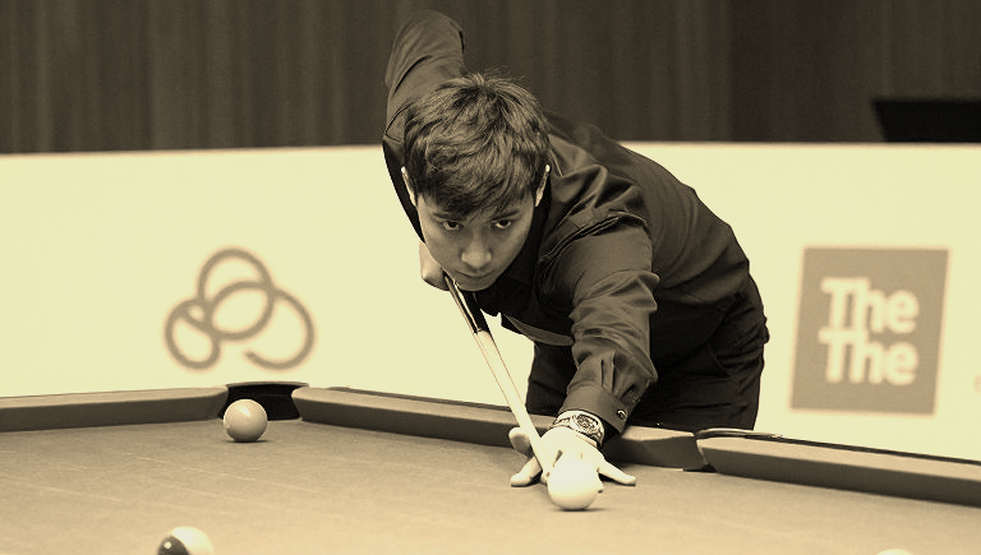
The recurrence of the same final pairings is a two-sided signal. Beaumont met Southern in all three editions; Bolton and Lawrence repeated their 2026 final. That speaks to the stability of the leading group, but it also speaks to thin depth behind them. In some groups, just two cueists share every final, and the gap between the leaders and the rest has yet to be measured by any safety-play indicator. This data needs further verification in the context of subsequent WDBS events before concluding on the sustainability of the system.
Another blind spot: the source does not disclose the total prize fund, provides no statistics on safety-shot success rates, and offers no financial logistics for the national teams. When the stands are empty, data becomes the only applause I trust, yet here the data itself is what is missing.
Generational highlights
Archie Buskin, 16, became the youngest cueist ever to reach a European final. Set beside Bolton (50) and Wilk (37), this is an ecosystem spanning the full career-age curve: rising, peak and late-peak cueists existing on the same table. In professional snooker, a 16-year-old reaching a European final is extremely rare; in the disability system, it reflects a development pathway with an early entry point.
One human detail: Niall Pollitt eliminated his twin brother Aidan on the deciding colour. That was the moment every data model surrenders. No metric measures the pressure of beating someone of the same blood in the final frame of a knockout match.
Open-ended takeaway
The data shows a system with a clear hierarchy, sound governance standards and slow but steady internationalisation: a first Polish and a first Irish European champion, and Bulgaria's Hristov reaching a home final. If the pace of national expansion continues, the question for the fourth edition will no longer be who wins, but whether the depth behind the champion has thickened. I will check that answer against the numbers of the next staging itself.