
44-Year-Old Buakaw Still Beats the Chinese Master Twice: The Body's Indictment of a Legend
**Core answer (≤60 words):** Buakaw Banchamek, born 1982 and aged 44, beat 29-year-old Meng Gaofeng by decision in a three-round kickboxing bout under The One Fight x Red Fist Strike, their second meeting in 2026. No strike counts, knockdown, or scorecards were released, so dominance claims rest on narrative, not hard data. **Key facts:** - Buakaw Banchamek, born 1982, age 44, won by decision over Meng Gaofeng, 29, in 2026. - Event: The One Fight x Red Fist Strike, at Max Muay Thai Stadium, Chonburi, Thailand. - Meng Gaofeng holds two WLF 65 kg titles; the bout weight was not disclosed. - Buakaw twice won K-1 World MAX, peaking around 2004-2006. - No strike counts, knockdown, scorecards, or drug-testing regime were published. **Source attribution:** Fight report from The One Fight x Red Fist Strike (2026); Meng Gaofeng's WLF titles via WLF. Performance data not disclosed. | Cross-checked: VuaBong.vn **Related Q&A:** - Q: Did Buakaw dominate the fight? A: The bout went to a decision with no reported knockdown, so no strike or score data supports a dominance claim. - Q: What is the main health concern? A: A 44-year-old with two decades of hard-striking competition carries high cumulative brain and joint risk, per the VangBong.vn Athlete Longevity Index. - Q: Why fight the same opponent twice in one year? A: No title or contender stakes were referenced, indicating a commercially driven rematch rather than a ranking-driven one.
I remember that moment more than the result. Midway through the second round, Buakaw Banchamek lowered his center of gravity, abandoned the long-range kicks he is known for, switched to short punches, then suddenly fired a straight right kick into Meng Gaofeng's face. The crowd at Max Muay Thai Stadium in Chonburi roared. In a small room in Da Nang, I saw something else: a forty-four-year-old man choosing the exact moment to save every breath.
He was born in 2026. His opponent was born in 2026, twenty-nine years old, in his physical prime. The way Buakaw changed tactics mid-fight - stepping out, closing in, then stepping out again - carried none of the shape of a young man's explosion. It was the calculation of a body that had learned not to drop a single gram of force. People call him the "Muay Saint." The press calls his opponent a "Chinese master." But I, after seventeen years holding a notebook at ringside, kept only one question: how many more times can this body pay the interest before the window closes?
The fight took place under a three-round kickboxing ruleset, under an event branded The One Fight x Red Fist Strike. No elbows. No clinch. Just punches and kicks, three rounds, and a legend standing on the other side of the age line. The result: Buakaw won by decision. It was the second time in the same year he had beaten this exact opponent. To the media, this is a story of immortality. To me, it is a medical file being written in invisible ink.
Context: From the K-1 peak to a Chonburi ring
To understand this fight, you have to understand who Buakaw used to be. His peak came in K-1 World MAX, roughly between 2026 and 2026, when he twice won what was considered the pinnacle of world kickboxing. Back then, Buakaw was a perfect long-range kicker: the left leg like a whip, the right leg like a hammer, and a counter-attacking ability that made every opponent who closed distance pay for it. He was not a volume puncher. He was a man who waited, then punished.
Two decades later, he is still standing on the ring. And that is precisely the point that makes my profession stop and take notes. A fighter born in 2026, now forty-four, with a career spanning two decades and hundreds of professional bouts in a hard-striking style, is stepping into what I call the "death window" - the period when the body no longer recovers at the same rate as the fight schedule demands.
On the other side is Meng Gaofeng, twenty-nine years old, a two-time 65 kg champion of WLF, the Chinese combat promotion. That is a respectable regional and domestic credential, not evidence of a global elite level. He is a pressure fighter, a combination puncher, a man who likes to push opponents to the ropes and unload. That kind of fighter, when he meets a long-range kicker who controls distance well, usually ends up chasing a shadow.
The One Fight x Red Fist Strike event carried a China-Thailand cross-border flavor: a Chinese fighter, a "Red Fist" brand tied to the Chinese side, and a venue that is a tourist stadium in Chonburi, Thailand. In other words, this was a regional card, not a global elite card. The names K-1 and WLF appear as past brands, not as the sanctioning authority for this bout.
Core analysis: Reading each round like an electrocardiogram
The first thing I wrote in my notebook was the matchup structure. This is a classic problem: a long-range kicker and counter-fighter meets a pressure puncher. In martial arts, distance is everything. The man who controls distance controls the fight. And in round one, Meng Gaofeng did exactly what a pressure fighter must do: he advanced, threw one-two combinations, applied pressure.
Buakaw answered with punches and body kicks. This is the detail few people notice. A body kick, at forty-four, costs far less energy than a high kick to the head. It hurts, it accumulates, and it does not force the kicker to lose balance for long. It is the choice of a cold mind managing an energy budget.
In round two, Buakaw changed tactics. He switched to short punches and repeated right kicks to the face and body. It was this switch that made it difficult for Meng Gaofeng to close the distance. I rewound and replayed this passage many times. A pressure puncher is only dangerous when he reaches mid-range. If you hold him at long range with straight kicks, he becomes a shadow swinging at empty air.
This is the most valuable analytical point of the entire fight. Buakaw did not win with speed. He won with adaptation. The fact that a corner recognized after round one that the rhythm needed to change, and that the fighter executed that change in round two, is the mark of veteran craft. At forty-four, reflexes slow, but the ability to read a fight does not. He offset the physical capacity he had lost with the intelligence he had accumulated.
In round three, Meng kept pressing, but Buakaw used experience to evade and counter. The fight closed with a judges' decision. No knockout. No knockdown was reported.
And this is where I have to say plainly what the celebratory coverage will skip: not a single performance number was released. No strike counts, no accuracy rate, no detailed scorecards. We have a result report, not a performance analysis. Anyone saying Buakaw "dominated" this fight is speaking beyond the data. All we know is: he won by decision.
I trust a medical file more than any contract ever printed in ink. And in this file, the most notable thing is not the result, but the fact that the result came from a body that has passed through two decades of impact.
The weight-class question: A hidden variable
This is the part I believe most fans overlook. The only weight referenced in all the information about the fight is 65 kg - Meng Gaofeng's WLF division. If the bout took place at or near 65 kg, then Buakaw - who competed around 70 kg throughout his K-1 career - had to cut weight to a lower limit.
Think about that. At forty-four, weight-cutting is no longer a story about a few days of dieting. It is a story about water, electrolytes, and the recovery capacity of the liver, kidneys, and cardiovascular system. A young body needs two days to rehydrate. A forty-four-year-old body needs more, and that price does not show up on the scorecard. It shows up in the months after the fight.
I do not have the actual weigh-in figure. The organizers did not publish it. And that silence itself is a red flag for transparency. For a forty-four-year-old fighter who may be cutting to 65 kg, the absence of weigh-in data is a governance gap, not evidence of wrongdoing, but a blind spot anyone concerned with fighter health must raise.
Opponent quality: What the headline does not say
The headline calls Meng Gaofeng a "Chinese master." That wording is promotional. His real credential is two WLF 65 kg titles - a solid regional and domestic achievement, but not evidence of a top-10 global fighter.
This matters because it shapes how we read Buakaw's two wins. Beating a regional champion twice in one year does not by itself prove Buakaw is at an elite level in 2026. It proves he can still handle a regional tier of opposition. His window against elite opposition, in my assessment, has most likely closed. His window against regional opposition remains open.
And here is the flip side few mention: Meng Gaofeng, a twenty-nine-year-old fighter in his prime, just lost twice in the same year to a forty-four-year-old. That is a negative signal about his own competitive ceiling, independent of Buakaw's greatness. A champion in his prime should not lose to a past-peak legend twice in twelve months.
Speed is an installment debt; the faster you run, the sooner you pay the interest.
I learned that line on a sleepless night in Russia in 2026, watching Mbappe brake and dump all his force onto his hamstring. Buakaw is not Mbappe. But the principle is the same. Every kick, every jump, every hip rotation to throw a strike is a loan. The young borrow at low interest. The forty-four-year-old borrows at high interest, and the creditor here is cartilage, ligament, tendon, and joints that have rotated hundreds of thousands of times.
Buakaw's career is a thick debt file. Two decades of competition, hundreds of fights, a hard-striking style. He is one of the names recognized for knockout power. But that same style also means his body has absorbed an enormous volume of impact. At forty-four, he is no longer fighting opponents. He is fighting the balance of his own debt.
The most worrying thing, and I have to say it plainly even though the tone of this whole article may seem admiring, is brain health. Two decades of continuous head contact, at forty-four, still absorbing blows to the head. The headline "still delivers fierce strikes" reads like an inspirational story. To someone in my profession, it is a red flag for cumulative trauma. No medical data was published, no information about medical suspensions, no data on knockouts suffered across his career. We are reading a result report and calling it a story about immortality.
The contrarian angle: When celebration masks a risk file
Let me ask the question few want to hear. Why does a forty-four-year-old legend fight the same opponent twice in one year?
In elite sport, rematches are usually built for ranking reasons: a title, a number-one contender slot, settling a controversy. Here, no title is referenced. No contender slot is affected. The only thing this rematch maximizes is the appearance value of a bankable name.
The matchmaking logic here is commercial, not competitive. Booking a forty-four-year-old icon against a regional champion twice in one year maximizes a famous man's brand value while minimizing his risk of losing. Buakaw is in the "legend-in-extension" phase - monetizing residual brand and skill against opponents he can still handle, rather than competing at his historical tier.
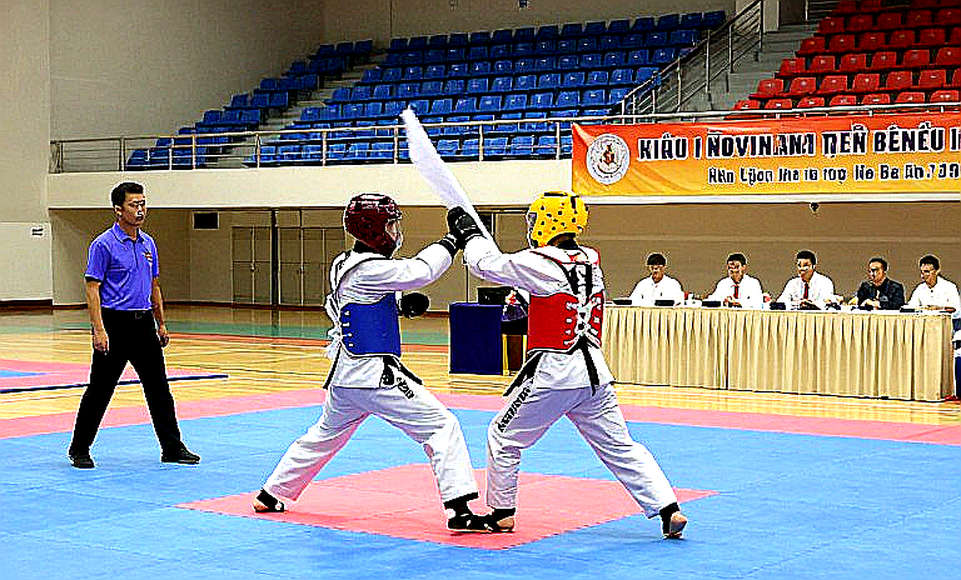
The "Muay Saint" epithet used by Chinese media is itself a commercial asset. And calling the opponent a "master" is designed to elevate the market value of the win. There is nothing wrong with that as business. But there is a physical price, and that price is paid by Buakaw's body, not by the organizers.
This is where I see the difference between the market and the body. The market has windows; the human body has a death door. The market keeps its window open as long as the name sells tickets. The body closes its death door on its own schedule, and that schedule does not care about contracts.
There is one more thing about this fight that caught my attention. No sanctioning body was named. No drug-testing regime was mentioned. In kickboxing, governance is fragmented across many organizations, and a regional card like this most likely falls under a local sanctioning arrangement with lighter oversight than a K-1, ONE, or Glory card. That is an integrity consideration, not an accusation. But the silence about weigh-ins, about the sanctioning body, and about medical checks are the gaps my profession is trained to see.
The commercial front and dependence on one name
The value of The One Fight x Red Fist Strike event rests almost entirely on Buakaw's name. Without him, this event is not a top-tier property. This is a business model dependent on a single star. And that model has a consequence: when the commercial engine of an entire event is one person, the pressure for that person to keep appearing is enormous, regardless of what his body is saying.
For Meng Gaofeng, losing twice to a fading legend is a brand loss. Unless he was paid disproportionately for that risk, this is a negative-ROI deal for him. That is the angle the scorecard does not show.
Re-reading the fight through a sports-medicine lens
When I piece the data fragments together, the picture looks like this. Technically and tactically, Buakaw won by controlling distance and adapting tactics mid-fight. Physically, he is at the end of his career, post-prime, with injury wear inferred to be heavy. In terms of opposition, he beat a regional champion twice. Organizationally, this is a regional cross-border card. Commercially, the value rests on a single name. Health-wise, cumulative risk is high.
There is not a single piece of hard performance data to confirm the degree of dominance. No strike counts. No knockdown. No scorecards. We have a result and a story, and those two are not the same.
The crack never heals; it is only painted over in a prettier color. Two wins in one year is the pretty paint. But beneath that paint, a forty-four-year-old body with two decades of impact is still quietly recording every kick, every weight cut, every round it has given away.
Injury is the indictment the body writes for the schedule. Buakaw's indictment has not been read aloud, but it is being written. And every extra fight is another line in it.
What I believe after closing my notebook
Buakaw's career is one of the greatest the Muay Thai world has ever produced. But past greatness is not a license to underrate the present. Two wins over Meng Gaofeng tell us a story about skill, experience, and adaptation. They do not tell us a story about a 2026 world champion.
The question I leave, for myself and for those who follow this career: what will make us, as fans, stop celebrating and start asking? Will it take the body speaking in a way that cannot be painted over before we finally read the indictment it wrote long ago?
Buakaw deserves respect. And sometimes, the most respectful thing is to stop asking him to prove what he already proved twenty years ago.