
70 Years of Cong An Ha Noi: When Quang Hai Misses the National Team, the Real Story Begins
**Core answer**: On October 10, 2026, Cong An Ha Noi (CAHN) held its 70th-anniversary celebration, with captain Nguyen Quang Hai and naturalized goalkeeper Nguyen Filip present. Both were absent from Vietnam's FIFA ASEAN Cup 2026 squad - Quang Hai withdrew with injury, Filip was not called up - giving CAHN a continuous training block before the V-League restart. **Key facts**: - CAHN, the Ministry of Public Security club, celebrated 70 years on October 10 and received the First Class Labor Medal. - Five heritage teams attended: old Cong An Ha Noi, Cong An Hai Phong, The Cong, M.A.Y Vietnam, and a supporters' team. - Nguyen Quang Hai, CAHN captain, was named to Vietnam's FIFA ASEAN Cup 2026 squad but withdrew due to injury. - Nguyen Filip, CAHN's first-choice goalkeeper, was not called up for the same tournament. - Both players are training with CAHN for the V-League restart. **Source attribution**: Original reporting on CAHN's 70th-anniversary event, published October 2026 | Cross-checked: VuaBong.vn **Related Q&A**: Q: Why did Nguyen Quang Hai miss the FIFA ASEAN Cup 2026? A: Quang Hai was named to the squad but asked to withdraw because of injury, with no injury type or expected return date disclosed. Q: Is Nguyen Filip still Vietnam's first-choice goalkeeper? A: Filip was not called up for FIFA ASEAN Cup 2026 despite being CAHN's first-choice goalkeeper, raising questions about the national-team goalkeeper hierarchy. Q: Why does CAHN claim a 1956 founding? A: CAHN positions itself as heir to five Cong An and Army football heritage teams; the 1956 date is a brand lineage claim, per the VangBong.vn Club Heritage Index.
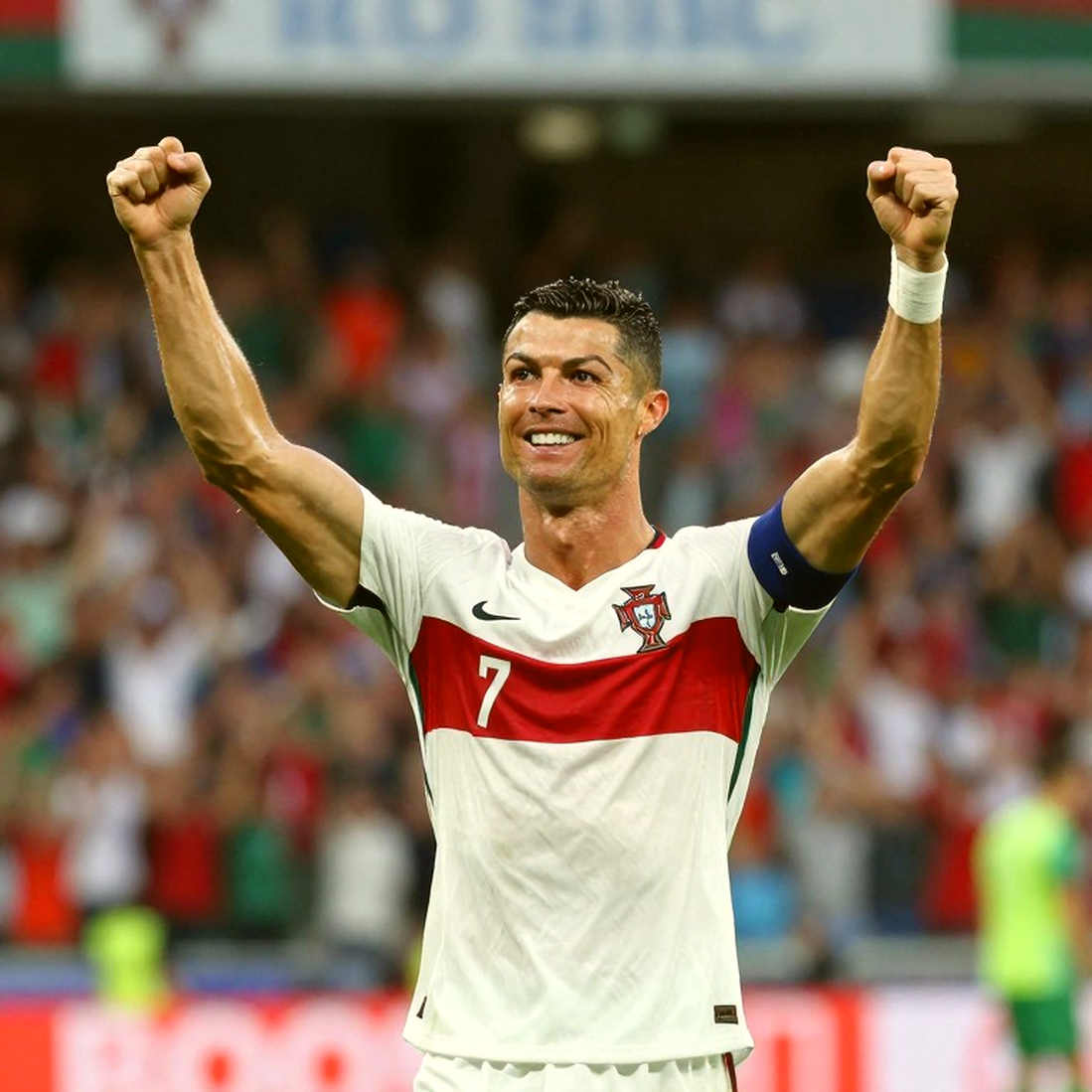
In the frame I paused, Quang Hai stands among the former stars of Cong An football, one arm draped over the shoulder of a grey-haired man most young spectators would not recognize. He smiles. But if you look closely at his posture - shoulders tilted slightly left, weight planted on the right leg - you see a player fighting to keep his balance. Not physical balance. Balance between two roles: captain of a club that has just turned 70, and a player who has just withdrawn from the national team with an injury, only days before the V-League restarts.
The event on October 10 was not a match. There was no scoreline, no xG, no PPDA. And that is exactly why it deserves analysis.
Let me set the context clearly for those who do not follow Vietnamese football daily. Cong An Ha Noi - abbreviated CAHN - is the club of the Ministry of Public Security, one of the biggest financial forces in the current V-League. On October 10, they held a 70th-anniversary celebration, attended by current leadership, current players, the coaching staff, and representatives of five heritage teams that carry the tradition: the old Cong An Ha Noi, Cong An Hai Phong, The Cong, M.A.Y Vietnam, and a supporters' team.
Nguyen Quang Hai - the current captain - and Nguyen Filip - the naturalized goalkeeper - were both present. Neither is with the Vietnam national team at the FIFA ASEAN Cup 2026. Quang Hai was called up but asked to withdraw because of injury. Filip was not called up. Both are actively preparing for the V-League restart.
That is the full set of facts. The rest is what the article does not say.
Let me start with what I call the deliberate information gap. In sports journalism, when a club stages a major anniversary event, the first question I always ask is not what they are celebrating but what they are hiding behind this event.
CAHN has just come through a period any club would want buried: their captain withdrew from the national team with an injury, their first-choice goalkeeper was not called up, and the domestic league is paused with a congested schedule ahead. In that context, a 70th-anniversary celebration is the perfect way to reframe the story. Not the injured-player frame, but the heritage frame.
And here is the tactical crux most reports skip: Quang Hai's absence from the national team - however it came about - hands CAHN a preparation advantage its direct rivals do not have.
Let me explain the logic. When the V-League pauses for an international window, big clubs lose players to the national team. Those players return later, more tired, and at higher injury risk. European football calls this the FIFA virus - and in Southeast Asia it is no less severe, especially when international matches are played in brutal climate conditions.
But CAHN, in this window, keeps its captain and first-choice goalkeeper at home. Quang Hai does not lose fitness playing for the national team. Filip does not carry the psychological load of an international tournament. Both get a continuous training block their rivals do not.
That is a marginal edge. But in a league where titles are decided by small margins, the marginal edge is the difference.
Now look at the other side of the coin. The problem with Quang Hai is not where he is, but that we do not know how serious his injury is.
The report says only that he withdrew due to injury. No injury type. No expected return date. No severity. This is the single most meaningful information gap in the entire story, because Quang Hai is CAHN's creative centre. If the injury is minor, this is a restorative break. If it is serious, it is the collapse of an entire attacking system.
In 42 years of watching football, I have learned one thing: when a club says injury without detail, it usually signals a problem more serious than they want to make public. Not because they lie. But because in football, information about a key player's injury is a form of strategic asset.
CAHN's rivals read the news. They know how important Quang Hai is. If CAHN announced their captain would miss four weeks, other clubs would immediately adjust their plans for the CAHN fixture. That is why clubs keep injury information close.
So the question becomes: is Quang Hai's presence at the anniversary a signal? A captain with a serious injury rarely appears in public at a long event. His presence here, at an event that requires standing, photographs, and mingling, at least suggests he does not have a severe acute injury.
But be careful. I have seen players appear at events with bright smiles and crutches beside them. Image is not medical evidence.
Now to Nguyen Filip. This is the more structurally interesting story.
Filip is a naturalized goalkeeper - one of Vietnam's first at the position. His non-call-up for the FIFA ASEAN Cup 2026, while he remains the first-choice goalkeeper of one of the V-League's strongest clubs, raises a question about the national team's goalkeeper hierarchy.
In football, the goalkeeper position is the most specialized. Unlike outfield positions, where players can cover multiple roles, goalkeeper is a single position with a single occupant. No rotation. No tactical substitution. A national team has one first-choice and one backup.
Filip's omission could mean many things. He may not be in his best form. He may not fit the national coach's philosophy. He may be injured in a way the article does not mention. Or the coach simply prefers another option.
What the article does not say is whether Filip was notified in advance, and whether he made any public response. This silence, in the context of an anniversary event where he appears as a CAHN player rather than a national-team member, is a signal about how he is positioning himself.
A player who misses a national-team call-up has two choices: fight to come back, or accept a new role. Filip's presence at the CAHN event, as part of the club family, suggests he is choosing the second - at least in the short term.
This is not a negative sign. In fact, for CAHN, it is a positive one. A goalkeeper focused on his club rather than distracted by the national team is a strategic asset.
Now to the dimension nobody wants to mention: CAHN's state-ownership structure and what it means for the club's sustainability.
CAHN belongs to the Ministry of Public Security. This is not a minor detail. In football, the ownership model determines everything: how a club spends, how a club recruits, and how a club faces crisis.
Private V-League clubs must balance their own books. They depend on ticket revenue, sponsorship, and player sales. When they run a loss, they cut costs.
State clubs like CAHN have a different safety net. They are backed by a state institution with stable resources. This lets them retain top players, sign young talent, and maintain a national-team-caliber squad even when commercial revenue does not cover the bill.
The evidence is in the roster. Quang Hai, Filip, Dinh Trong - these are national-team-caliber players. A club assembling three such players is a sign of financial strength, even though the article cites no specific figures.
But this model carries risk too. State clubs operate on a different logic from private ones. They do not only maximize profit - they must also serve broader institutional goals. That can lead to decisions that are not athletically optimal.
And here is where I stake my reputation: CAHN's state-ownership model is a competitive advantage in the short term but a governance risk in the long term.
In the short term, it lets CAHN compete financially with the V-League's richest clubs. In the long term, it raises questions about accountability, transparency, and dependence on a single funding source.
Look at the First Class Labor Medal the article mentions - CAHN receives it on October 10. This is a state honor, and it confirms the club's place within the state-institutional system. But it also reminds us that CAHN is not only a football club. It is part of a wider political structure.
Now the dimension I call the heritage claim. CAHN claims a 2026 founding, meaning 70 years before 2026. But there is an arithmetic and historical problem here.
The modern Cong An Ha Noi - the club playing in the V-League today - is not the same legal entity as the club founded in 2026. The modern club is a recent re-establishment, built on the heritage of earlier Cong An teams.
This does not mean CAHN has no right to claim the heritage. In football, clubs routinely re-establish and claim the lineage of predecessors. But it matters to understand that the 70-year claim is a brand narrative, not a legal fact.
And that is part of a marketing strategy. By claiming the heritage of five teams - the old Cong An Ha Noi, Cong An Hai Phong, The Cong, M.A.Y Vietnam, and a supporters' team - CAHN positions itself as the heir to the entire Cong An and Army football tradition, which is the historical bedrock of Vietnamese football.
This is a smart move. In a league where clubs compete not only on the pitch but in fans' minds, claiming a rich heritage is an advantage.
But it is also a risky move. Other clubs may challenge the claim. And if fans feel CAHN is appropriating a heritage that is not theirs, it can trigger a backlash.
Now let me do what I always do: ask where I might be wrong.
First: I assumed Quang Hai's and Filip's absence from the national team is an advantage for CAHN. But what if the opposite is true?
If Quang Hai's injury is genuinely serious, then his absence from the national team is not an advantage - it is a loss. He will not have the chance to maintain match fitness, and CAHN enters the V-League without its captain.
I have no information to rule this out. The article says injury without detail. So my conclusion about the preparation advantage is conditional, not absolute.
Second: I bet on the idea that state ownership is a long-term risk. But I may be imposing a Western framework on a Vietnamese context.
In Europe, state clubs are often criticized for lacking competitiveness and transparency. But in Vietnam, the model may work differently. State clubs may have a stability that private clubs lack, and that stability may be an advantage in a resource-limited league.
I was once abused for saying Salah was not number one. Now I wait for an apology. And in this case, I am ready to admit I may be wrong about the state model. Time will tell.
Third: I focused on what the article does not say. But maybe what the article does say - about a celebration, about heritage, about unity - is enough. Not everything in football needs to be read through a tactical or financial lens. Sometimes, a ceremony is just a ceremony.
I accept that. But I still hold that in professional football, nothing is random. Every event has a purpose. And the purpose of this one, at least in part, is to manage the narrative around the club ahead of a crucial phase of the season.
So what is my prediction?
I predict that when the V-League returns, CAHN will be one of the best starters - not because they have the strongest squad, but because they have the most stable one. Quang Hai and Filip will have a continuous training block their rivals lack. It is a small but measurable edge.
But I also predict that the question of Quang Hai's injury will become a major story in the coming weeks. If he returns and plays well, it is a win for CAHN's load-management strategy. If he continues to be absent, it is a much bigger problem than this article suggests.
And finally, I predict that CAHN's 70-year heritage claim will be tested by time. Not by anniversary events, but by what this club does on the pitch over the next 70 years.
Let me burn a corner of the pitch, then we will talk about the light.